

Across Nineveh, WRO continues to stand as a trusted bridge-builder—uniting governmental authorities, diverse communities, and local leaders through years of dedicated presence and unwavering commitment. In regions once divided by conflict, WRO’s long-established relationships and deep community trust have opened doors to collaboration that many thought impossible. Through transformative initiatives rooted in peacebuilding, social cohesion, environmental stewardship, and the protection of women and girls, WRO brings people together to heal, rebuild, and create a shared future filled with dignity, hope, and resilience. The following stories reflect not only the impact of our activities but the strength of the partnerships, relationships, and human connections that make this work possible.

Racing for Her Rights – When Hope Ran Through the Heart of Nineveh
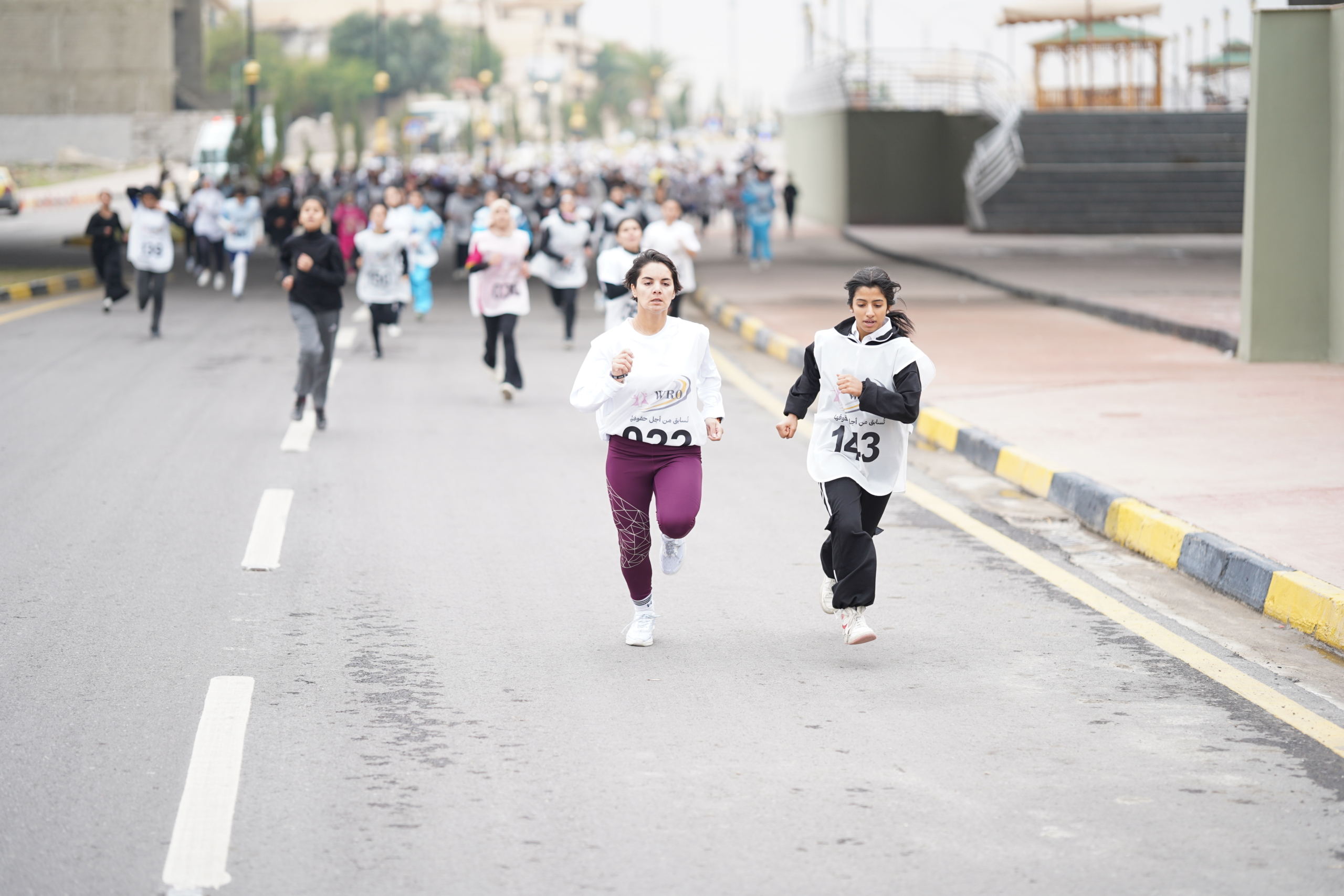
Al-Jawsaq Corniche came alive with an unforgettable image: 150 women and girls from Mosul, Bashiqa, Bahzani, and Hamdaniya running together in a historic 1-kilometer race called “Racing for Her Rights.” It was part of the global 16 Days campaign against Violence Against Women and Girls, but for Nineveh, it was something more—a symbol of healing and unity.
This event became possible because WRO, through years of relationship-building, had earned the trust of governmental bodies often separated by political divisions. Bringing these actors together had once seemed impossible, yet WRO’s credibility and longstanding presence allowed stakeholders—governorate officials, education directorates, committees, police units, and university representatives—to collaborate under one shared purpose: elevating women’s rights and strengthening peaceful coexistence.
When WRO discovered that many institutions were unaware of the global campaign, the organization organized an in-depth awareness session. What began as uncertainty quickly transformed into enthusiasm. Leaders felt inspired to join this worldwide movement, initiated by WRO in Nineveh for the first time.
Race day was filled with joy, emotion, and pride. For many girls, it was their first time seeing Mosul after years of displacement. Tears flowed at the finish line—not just from achievement, but from feeling recognized and celebrated. A touching coincidence lifted spirits even higher: the top three girl winners were Yazidis, strengthening pride within their communities.
The most powerful moment came when a Yazidi survivor from Kocho spoke courageously to the crowd. Standing in Mosul—the very place where fear once reigned—she spoke of hope, strength, and the courage of survivors who refuse to be defined by their suffering. Her voice carried across the Corniche like a promise of renewal.
The ripple effect was immediate. Nineveh University committed to holding annual awareness events. The Governorate Council organized its own campaign day. The Education Directorate revived its neglected sports department. More than 600–700 indirect participants—officials, community leaders, families, and citizens—witnessed a moment that reshaped Nineveh’s path toward equality and coexistence.
Thanks to WRO’s leadership, collaboration, and trusted relationships, Nineveh took a collective step forward—running together toward a future built on dignity, unity, and peace.

The Christmas Tree of Hosh Al-Biya – When Light Returned to a Wounded Heart
Hosh Al-Biya is one of Mosul’s most sacred historical sites, once the vibrant center of Christian life and coexistence. ISIS destroyed its ancient churches and turned some rooms into prisons, leaving behind deep wounds in the city’s soul.
WRO chose this very place to launch a powerful social cohesion initiative: the installation of Mosul’s Christmas Tree of Peace.
The moment the tree lit up, decorated with handwritten prayers and hopes from all components of the city, something extraordinary awakened. Participants learned that Father Raed Adel—a beloved priest and symbol of Christian resilience—had personally invited them. They felt welcomed, honored, and emotionally connected to a place many had feared was lost forever.
WRO’s ability to unite Christians, Muslims, Yazidis, Turkmen, survivors, youth, and elders in one event was a testament to the trust it had built over years. Its close relationships with religious leaders, local authorities, and communities made this gathering both possible and deeply meaningful.
A guided tour through Hosh Al-Biya allowed participants to walk through history—the beauty of ancient churches, the scars of ISIS-used prison rooms, and the powerful stories of two men who were tortured there. Their testimonies brought tears and silence, reminding all that peace requires remembrance and compassion.
Then came a moment of pure magic: a Yazidi girl lifted her violin and played “Merry Christmas.” Her gentle melody floated through the air, stitching together the hearts of everyone present—reminding them that healing can grow even from the darkest places.
Participants also visited the Annunciation Church, restored after six years of tireless effort, and stood on the platform where Pope Francis delivered his historic message of peace in 2021. These moments brought a sense of spiritual revival and unity.
Turkmen participants, proudly dressed in traditional attire, delivered a powerful message simply through their presence: that they, too, are an integral part of Mosul’s social fabric, rejecting all forms of violence and embracing coexistence.
Through WRO’s leadership, Hosh Al-Biya transformed from a site of wounds into a sanctuary of hope. The Christmas tree, standing tall amidst the ruins, became a living symbol of reconciliation, coexistence, and the rebirth of Mosul.

Planting Tomorrow – How Trees Became Roots of Social Cohesion Across Ninewa, IKR
Across Mosul, Talafar, Zacho, Nimrod, and Koya, WRO led one of its most unifying environmental initiatives: a tree-planting campaign engaging 365 participants from diverse communities. Students, doctors, IDPs, host families, teachers, police, volunteers, shop owners, and community leaders came together with a shared purpose—to plant life, unity, and hope into the soil of Nineveh.
This campaign was not just about planting trees. It was about healing a land and its people.
WRO’s long-term engagement in these regions had created trusted relationships with municipalities, schools, health centers, and community leaders. This trust made it possible for local authorities and communities—many of whom had never worked together—to collaborate openly and enthusiastically.
In Mosul and Koya, medical staff and displaced families planted trees at health centers with barren yards. One IDP woman said:
“Planting this tree reminded me of our home in Anbar… I felt like I brought back a piece of my past.”
Another shared gratitude for the kindness she received from local doctors, reflecting how coexistence grows through respect and humanity.
In Zacho, every household in Dashmir received a tree, and parents and children planted side by side. At Telkeber School, students and teachers transformed their schoolyard, deepening relationships and instilling environmental responsibility.
In Talafar, tree planting across schools, health centers, and police departments brought unity and pride. Teachers expressed deep appreciation for initiatives that support women and strengthen social bonds.
In Nimrod, every ethnoreligious group participated—Shabak, Kurds, Arabs, Christians, and Yazidis—showing how simple acts can build trust across diversity.
One participant captured the meaning perfectly:
“This activity strengthened social relations. Today, we planted peace.”
Across every site, WRO witnessed smiles, teamwork, and a renewed sense of belonging. Trees were planted not only in soil, but in hearts—rooting the values of coexistence, responsibility, and shared hope for future generations.
Lasting Reflection
These three initiatives—Racing for Her Rights, the Christmas Tree of Peace at Hosh Al-Biya, and the Nineveh-wide tree-planting campaign—represent more than activities. They are living examples of what becomes possible when trust, collaboration, and compassion guide our work.
Through years of dedication, WRO has built bridges where divisions once stood; strengthened cooperation among governmental authorities, community leaders, and citizens; and fostered a culture of peace across Nineveh.
Where there was fear, WRO helped cultivate courage.
Where there was division, WRO nurtured unity.
Where there was devastation, WRO planted hope.And together, with the people of Nineveh, WRO continues to build a future where every community can heal, every woman and girl can thrive, and peace has the chance to grow strong roots.